
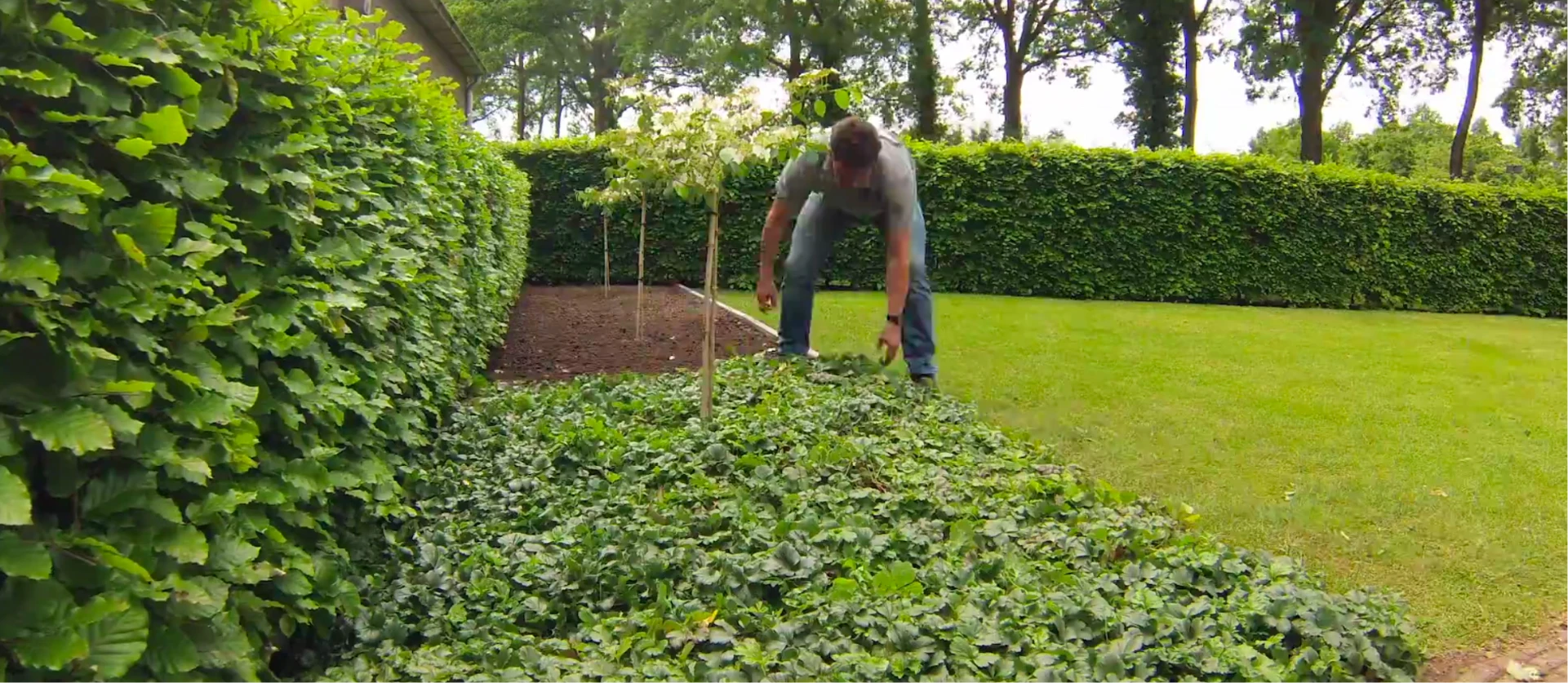
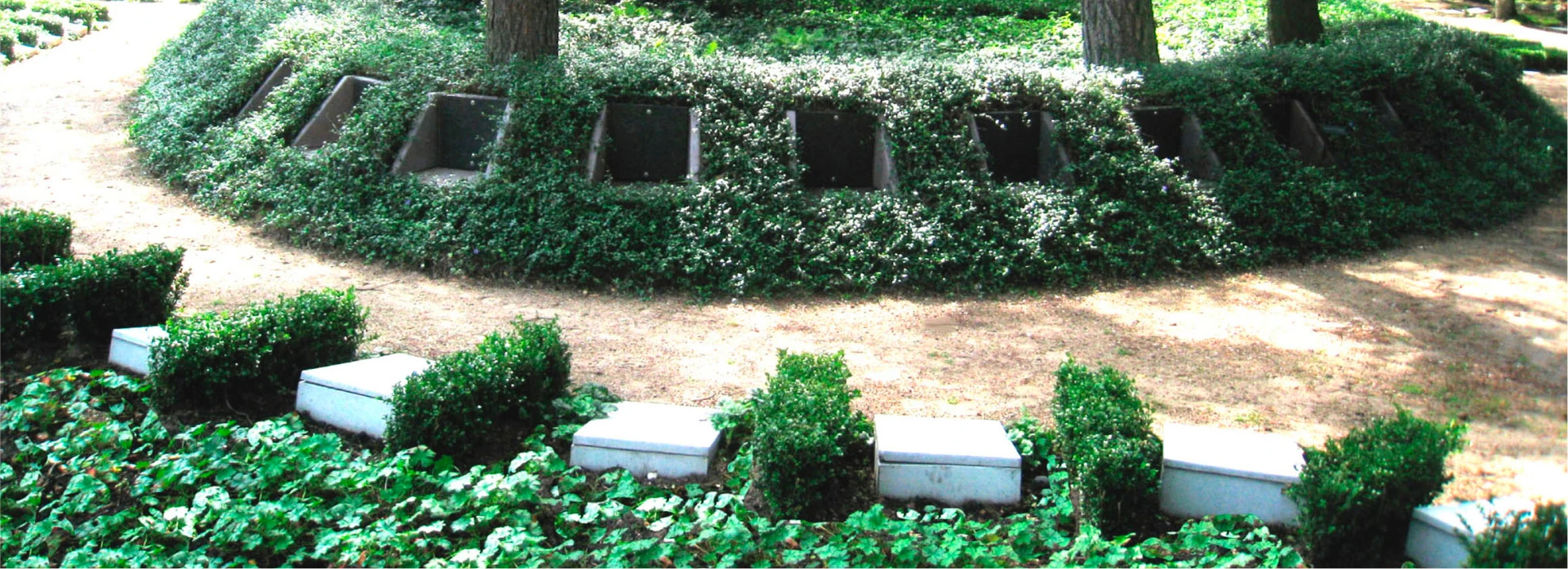
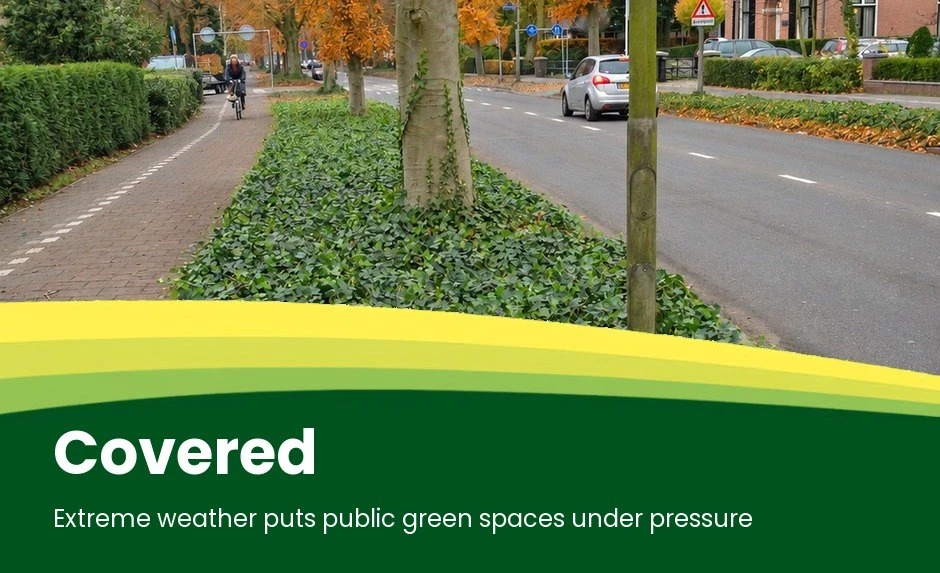
More extreme temperatures, prolonged drought and heavy rainfall are putting public green spaces under increasing pressure. Pre-grown plant mats offer a solution. For years, we have been growing plant mats that have already been through their vulnerable period in the nursery, making them more resistant to heat, drought and heavy rainfall. Are you responsible for green spaces and maintenance in the public realm? Then opt more often for planting that can take a beating.
Loose planting is vulnerable in its first year. The plants still need to take root, need water and have to be protected against weeds. It is precisely during this period that the weather strikes more and more often. Dry spells are followed by sprinkling bans, and heavy rain washes the soil away from slopes and planting beds. This leads to replacing failed plants, replanting and extra maintenance costs.
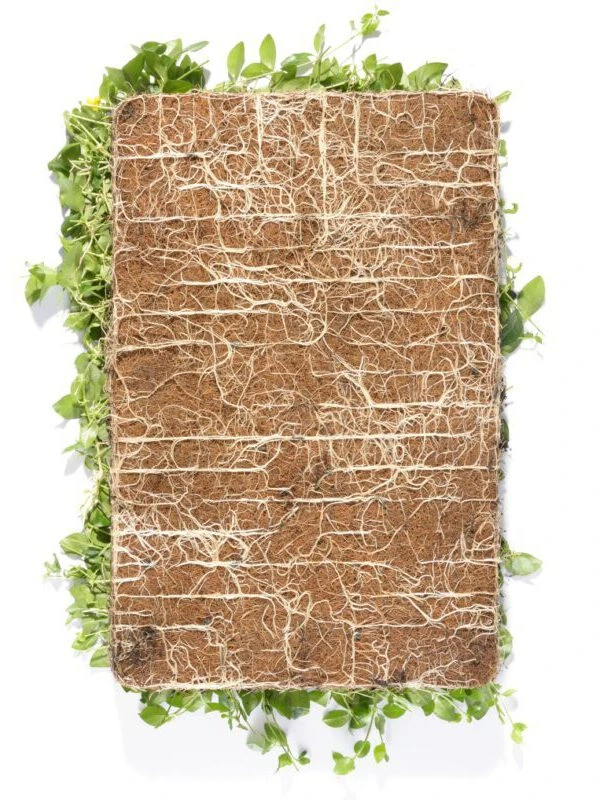
Our plant mats are fully pre-grown in our own nursery. There, the plants grow into a dense mat with a well-developed root system before they are installed. This makes them less vulnerable during installation and more resistant to challenging conditions. The dense mat covers the soil immediately and helps suppress weed growth. The roots hold the soil in place, even when it stays wet for a long time. After installation, the mats need little maintenance.
“Our plant mats save grounds maintenance contractors valuable time. They have already been through their vulnerable period in the nursery. They provide an attractive, established appearance from day one and maintenance stays limited.”
– Dennis Klein Boonschate, founder of Covergreen
Do you manage public spaces? Then choosing plant mats pays off in several ways:
In public spaces, plant mats are suitable for slopes and verges, roundabouts and central reservations, public planting beds and locations where irrigation is difficult or costly.
Plant mats do not only benefit you as a manager, but also the city itself. According to the European Environment Agency (EEA), cities can be up to 8 °C warmer than the countryside, due to a lot of stone, asphalt and little greenery. Planting counteracts this: plants evaporate water and thus cool their surroundings. A planted, well-rooted soil absorbs rainwater, whereas bare soil and paving let it run off. This relieves the sewer system during heavy downpours. Flowering species such as Delosperma attract bees and butterflies, and greenery makes a street more pleasant to live, work and spend time in.
Because a plant mat immediately forms a closed green layer, these benefits are there from day one. You do not have to wait a season for loose plants to cover the ground.
“Every square metre we turn from bare to green helps keep the city cool and liveable. Then, of course, that greenery has to stay put.”
– Dennis Klein Boonschate, founder of Covergreen
Two of our species are particularly well suited to extreme weather.
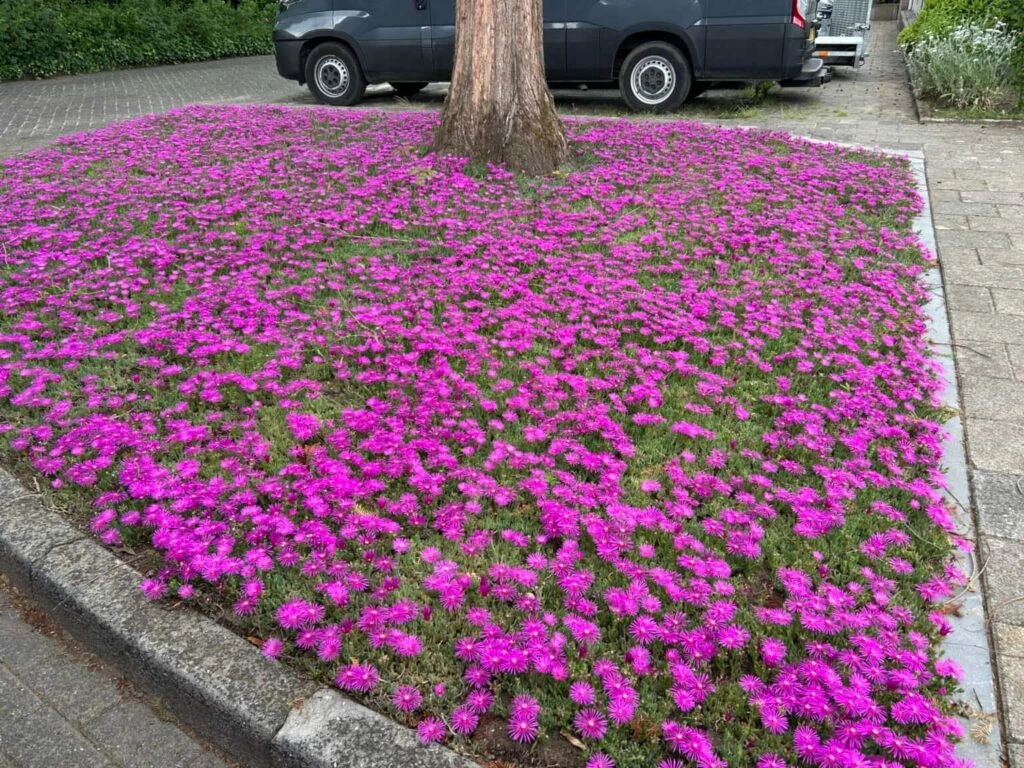
Delosperma cooperi is one of the most drought-tolerant species and suitable for sunny, dry spots.
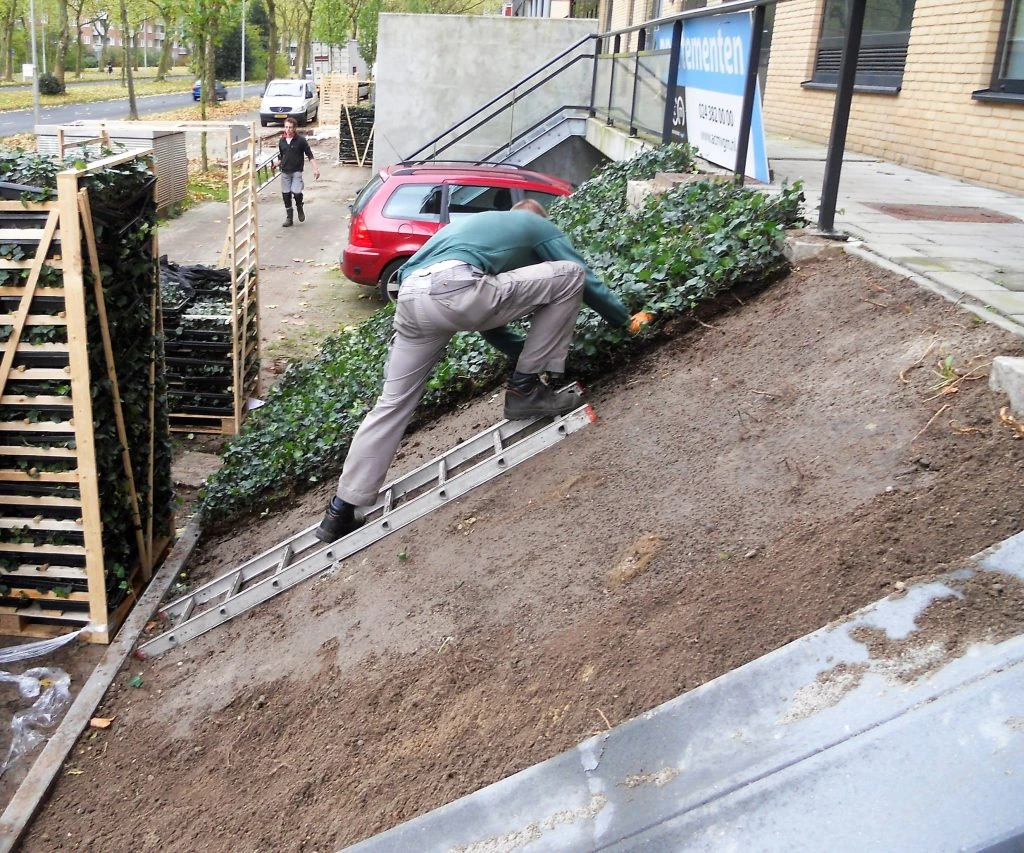
Hedera ‘Woerner’ is evergreen and ground-covering and suitable for a wide range of applications in public spaces, including places that stay wet for a long time.
We want to steer the conversation about climate-resilient greenery in a different direction: less about more watering, more about smarter planting.
Back to the overview“Climate-resilient greenery starts with the right plant combined with the right application. The extremes of recent years show that this choice is becoming more important than ever.”
– Dennis Klein Boonschate, founder of Covergreen
Copyright © 2018 - 2026, Covergreen®, All Rights Reserved. Ontwerp website ®reclamemakers. Development website Sitework
Continue with a language of your choice


