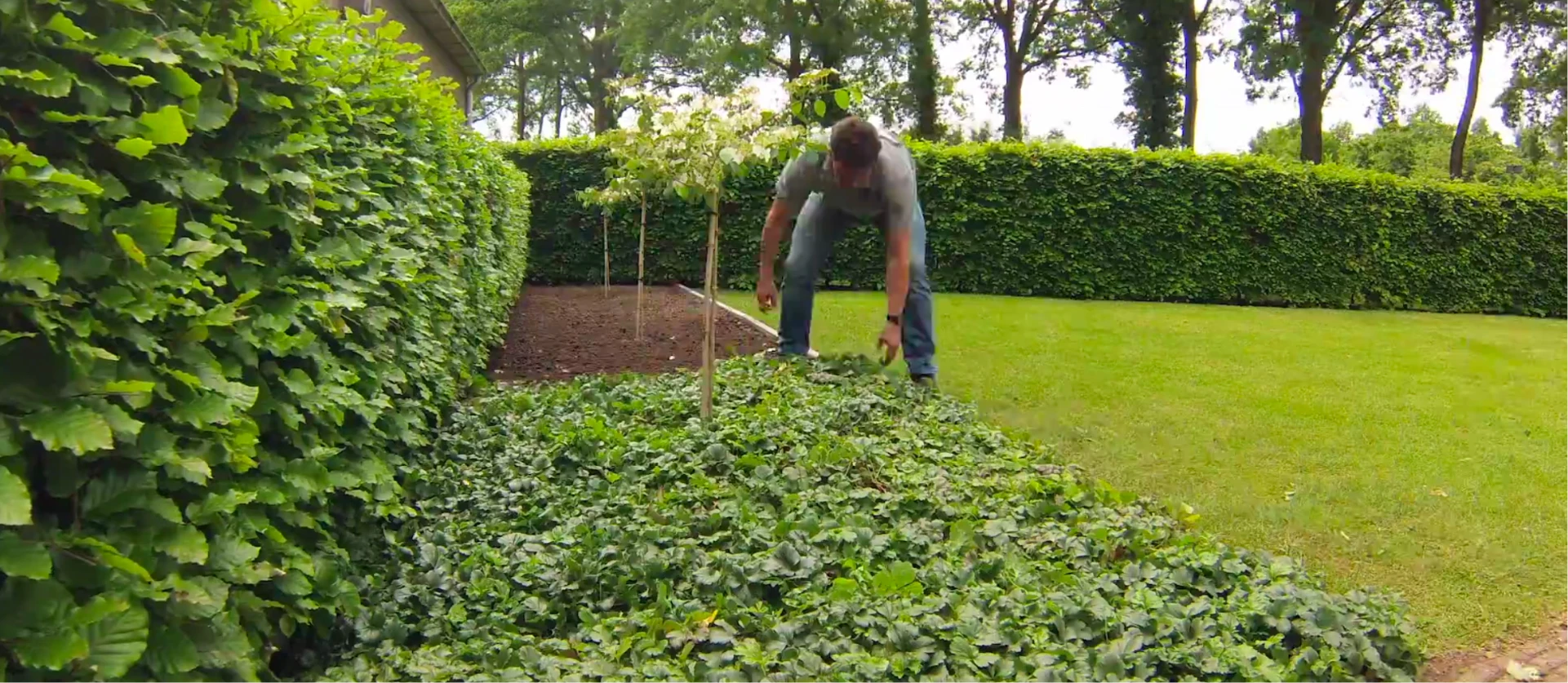
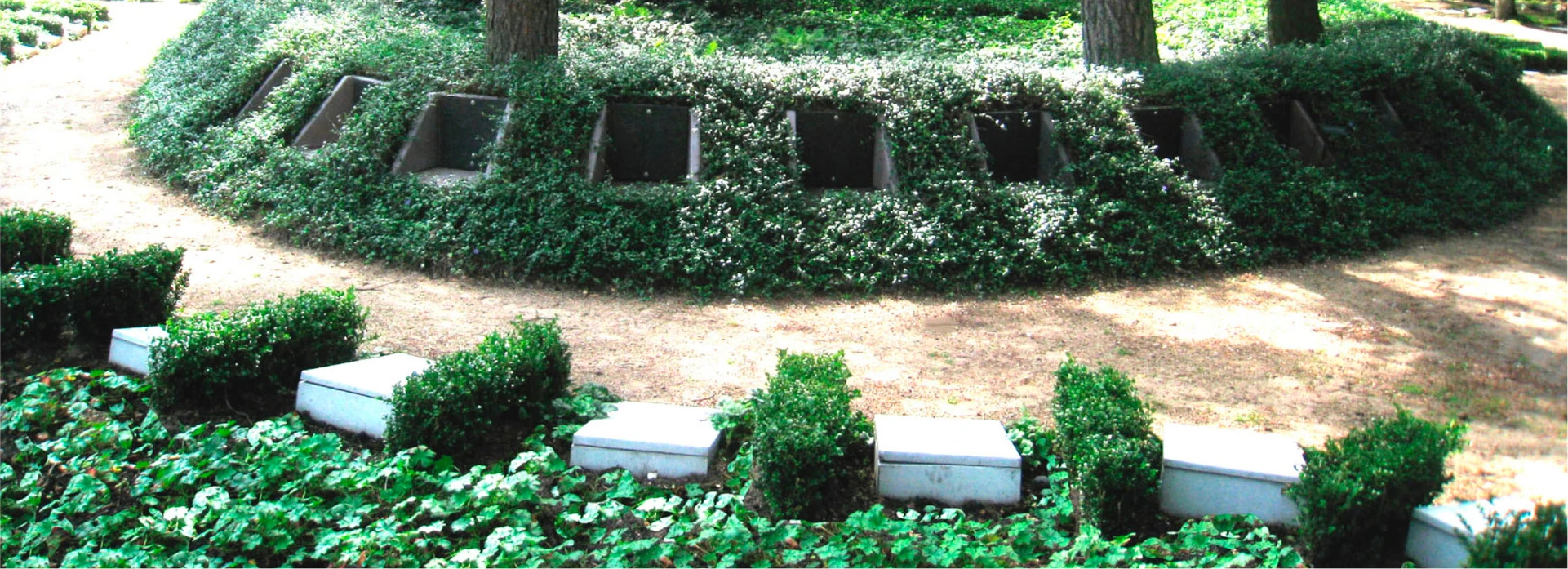


A trend you increasingly see in modern garden design is the use of larger and larger planters and flower boxes. In many gardens, there are various containers where you can apply ground covers – an excellent solution for a year-round green appearance. Our ready-to-use ground covers in large planters or flower boxes offer many advantages and are the perfect planting choice. On this page, we’ll take a closer look at why.
Planters are a great way to create a mini-garden at a different height. This allows you to highlight certain lines or elements in the garden. The material of the planter can also emphasize the overall garden style. Planters can be made or built from different materials. Some can even be constructed on-site, such as wooden planters or stone planters that are glued or built with masonry.
Other types, often not made on-site, are metal or plastic planters. Over the last few years, corten steel planters have become increasingly popular. Their warm, rust-brown color creates a natural yet eye-catching element in any outdoor space. If you prefer a sleek, modern look with vibrant or high-gloss colors, polyester planters are also an excellent option.
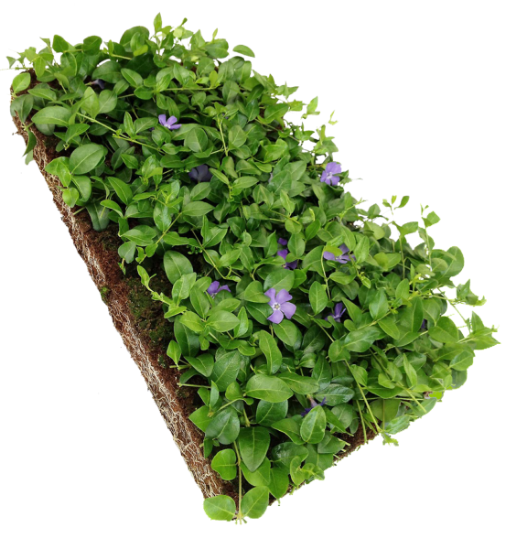
Completely maintenance-free doesn’t exist in reality, but low-maintenance definitely does. That’s why we’ve developed our plant mats to be as easy to care for as possible after installation. This makes Covergreen ground covers perfect for creating low-maintenance planters. Each plant mat measures 57×38 cm and covers 0.22 m². They can be laid like tiles, making it easy to quickly cover large areas with green. The mats can also be cut to size.
Once installed, all soil in the planter is covered with Covergreen greenery, leaving little room for weeds to grow. The reduced weed pressure makes your planter easy to maintain.
At Covergreen, we naturally believe our plant mats are the best choice for filling planters or flower boxes. However, you can combine them with a striking solitary plant for extra height or visual interest. Simply place the accent plant in the center of the planter and surround it with our ground-covering perennials — creating a low-maintenance, living green blanket.
Plant mats aren’t the obvious choice for narrow window boxes, but for larger planters (typically over 1.5 m²), they’re an excellent solution. The mats immediately cover the visible soil surface, giving the planter a lush, green look while protecting it from weed growth.
Outdoor planters should have proper drainage, either through drainage holes or direct contact with the ground when the planter has no bottom. If rainwater remains in the planter, it can damage plant roots and cause cracks during frost. To ensure success, always check that your planters drain properly.
All our plant mats can be used in planters. Even trees can be planted in containers, known as tree planters. Trees do need more root space, but for our plant mats, a soil depth of about 20 cm is sufficient since our perennials have relatively shallow roots.
In artificial environments like planters, it’s important to monitor both water and nutrients. Rain is often sufficient, but wind and sun can cause soil to dry out faster than in open ground. Check regularly during dry periods if the soil is still moist, and water deeply when needed — it’s better to water thoroughly once a week than a little every day.
Excess water will naturally drain through the holes in the planter. Depending on the humus and nutrient content of the soil, it’s wise to fertilize in spring and again in late summer with a general organic fertilizer. April and September are ideal times to do this.
Copyright © 2018 - 2026, Covergreen®, All Rights Reserved. Ontwerp website ®reclamemakers. Development website Sitework
Continue with a language of your choice