
The vegetation mat is a type of plant mat best known as the Sedum vegetation mat.
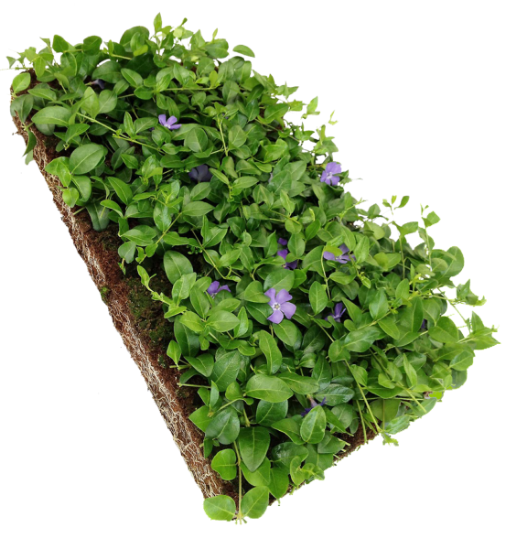
A vegetation mat consists of a mix of different Sedum species that are rooted and grown on a coconut fibre structure with fertile soil.
At Covergreen, we cultivate two versions of the vegetation mat. One is a high-quality version grown indoors in foil greenhouses, sized 60 x 40 cm.
In addition, we produce a simpler version for larger surfaces, measuring 120 x 80 cm.
This larger version is grown outdoors to allow for cost-efficient installation over large areas.
It is also of good quality but slightly less densely grown and rooted compared to the 60 x 40 cm variant.
The mix of Sedum species also differs between the two types. Below is an overview of the various Sedum species found in both vegetation mats.
Covergreen Sedum mix of the 60×40 cm vegetation mat (grown indoors in greenhouses)
Covergreen Sedum mix of the large 120×80 cm vegetation mat
Sedum is a type of succulent that adapts easily to its environment.
The relatively thick, rounded leaves store water, allowing the Sedum plant to survive during dry periods.
In line with Covergreen’s concept, succulents are very low-maintenance.
Another great feature of the selected Sedum varieties is that their leaves or shoots, when broken or cut, can easily form roots and grow into new plants.
A Sedum vegetation mat can be used in full sun or partial shade.
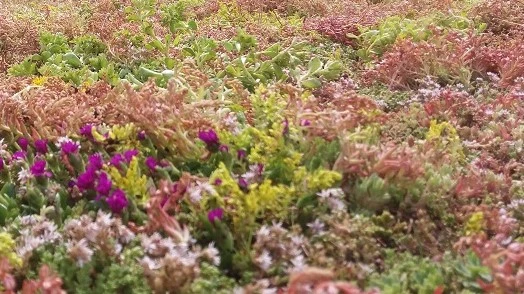
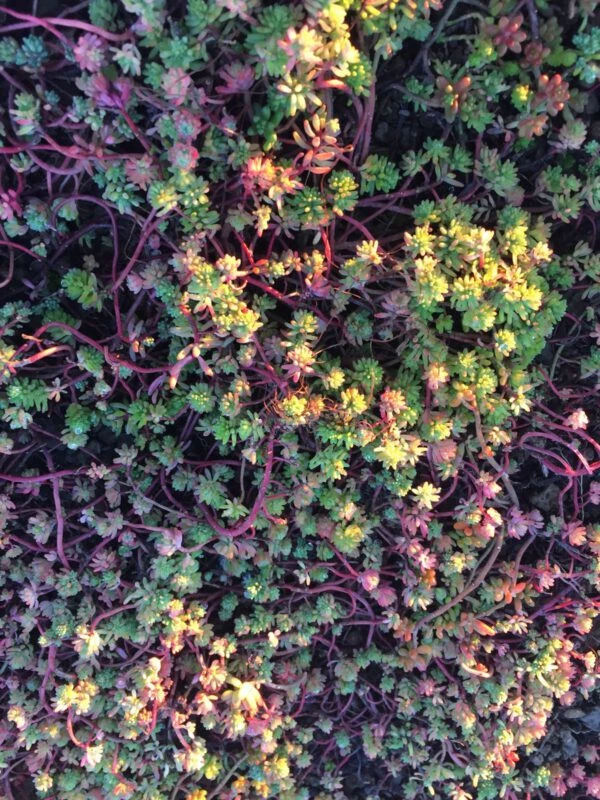
The colour of the leaves depends on how much sunlight the plant is exposed to.
Sedum has the special ability to protect itself from drought by turning red.
The more sun and dryness, the redder the leaves become. With more shade and sufficient moisture, the leaves gradually turn green again.
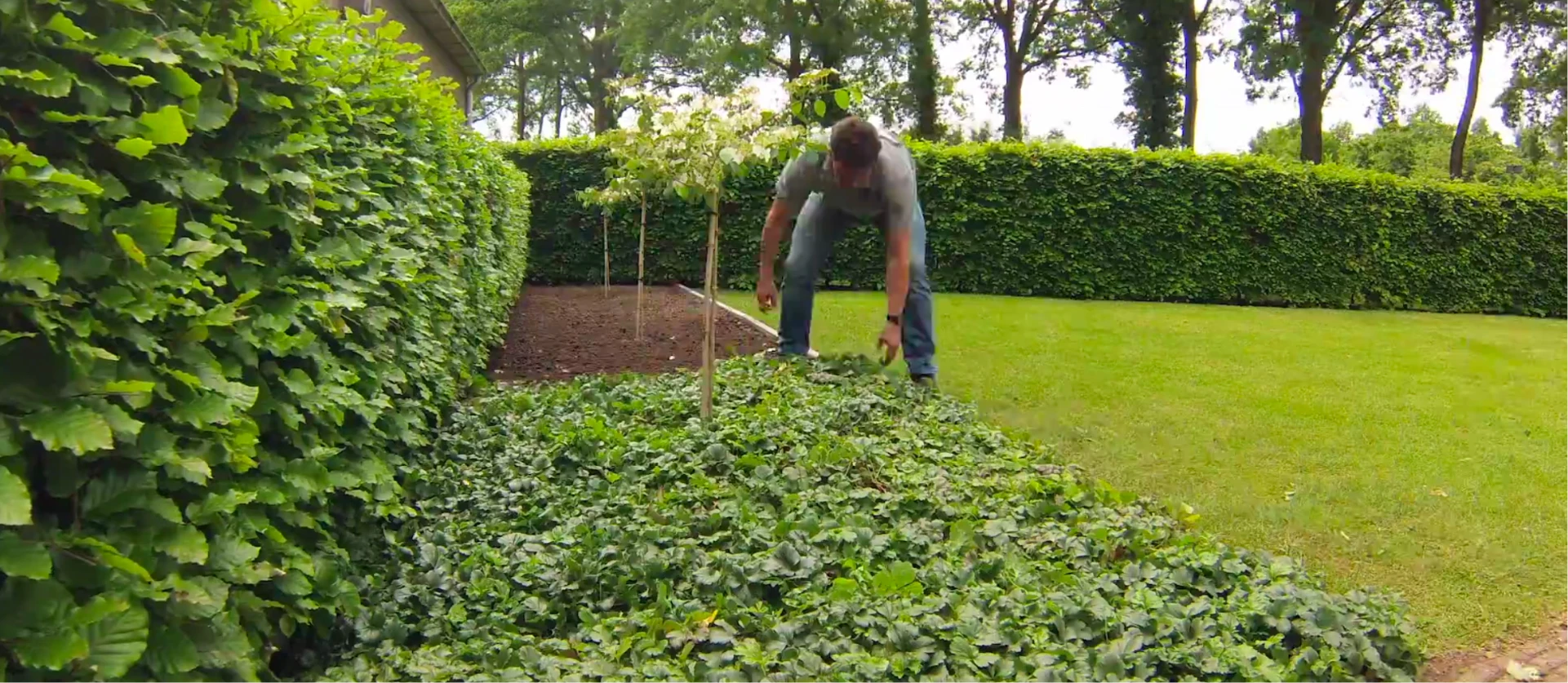
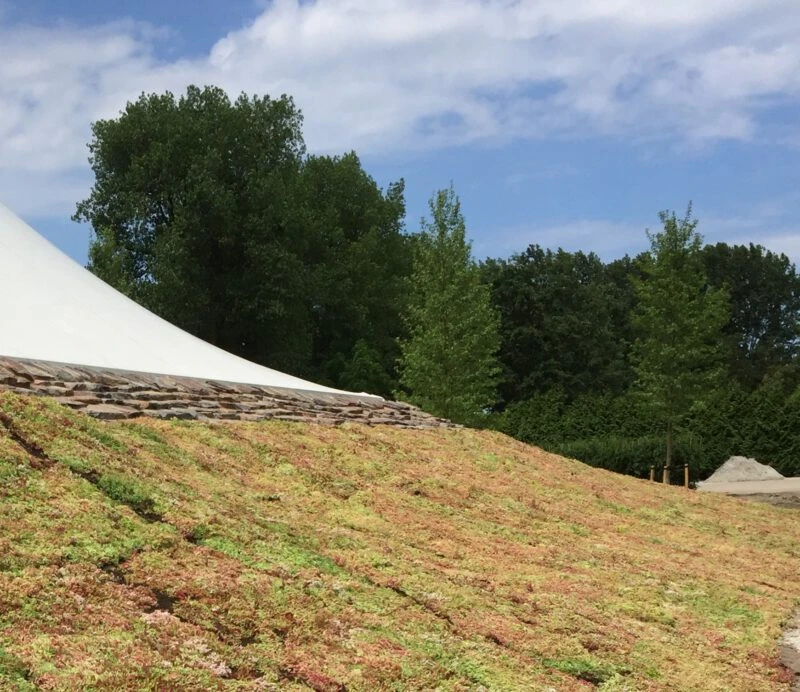
Vegetation mats are commonly used on roofs and as ground cover.
Vegetation mats are often applied on roofs.
That’s why we offer a ready-to-use Sedum cassette, which makes it easy and cost-efficient to create a Sedum roof.
A green roof, also known as a Sedum roof, offers many advantages.
It enriches the biodiversity of its surroundings, provides temporary rainwater storage during heavy rainfall, and gives your building a sustainable appearance.
See also this detailed description of vegetation roofs on woonbewust.nl.
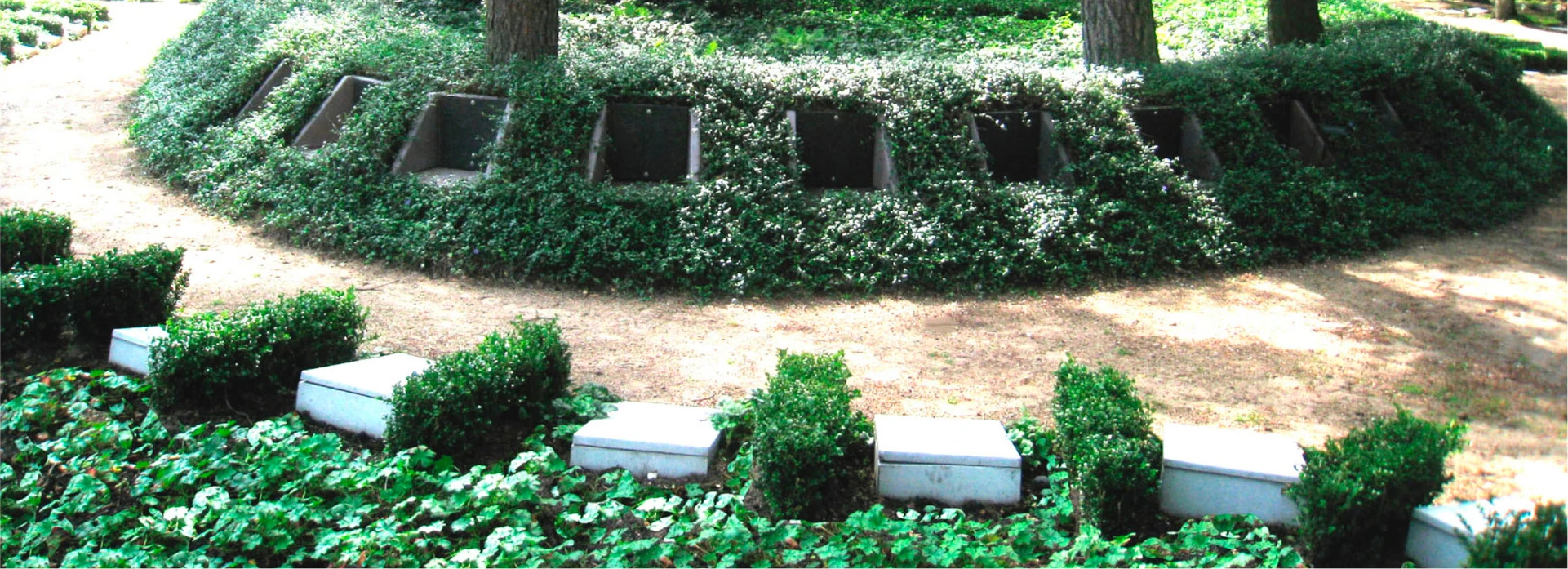
The Sedum vegetation mat is often used on slopes, urn mounds, green roofs, or embankments.
It requires very little water or nutrients, allowing it to grow even in challenging locations.
During the flowering season, the Sedum vegetation mat attracts many butterflies, bumblebees, and bees.



Copyright © 2018 - 2026, Covergreen®, All Rights Reserved. Ontwerp website ®reclamemakers. Development website Sitework
Continue with a language of your choice