
Wouldn’t it be great to have a green garden you can truly enjoy; without spending hours maintaining it? It’s the dream of many garden owners! A completely maintenance-free garden isn’t realistic, but a low-maintenance green garden certainly is. In this article, we’ll share practical tips on how to create one. Keep reading to find out how!
What is a low-maintenance garden?
Why choose a low-maintenance garden?
How to create a low-maintenance garden
Irrigation and water management
Which plants are best for a low-maintenance garden?
A low-maintenance garden is a beautifully kept green space that requires minimal effort to stay that way. It allows you to spend more time enjoying your garden instead of constantly working in it. It sounds simple, maybe even too good to be true, but is it really possible?
Let’s clear up a misconception first: a completely maintenance-free garden doesn’t exist. Even a garden made entirely of tiles and concrete still needs cleaning and upkeep, and it often looks dull and lifeless.
There are, however, many natural solutions to reduce the most time-consuming garden tasks. You can make your garden easier to maintain by minimizing common chores such as:
Many garden owners would love to cut down on these tasks. Start by tackling the chores you find most annoying — whether it’s endless weeding or weekly lawn mowing. Then, look for ways to make those areas more low-maintenance. In the section “How to create a low-maintenance garden,” we’ll show you several practical time-saving solutions.
A low-maintenance garden allows you to enjoy a beautiful green space — whether at home or at work — without constantly dealing with the less pleasant jobs. One of the biggest frustrations for garden owners is the sight of weeds. Pulling weeds takes a lot of time, and few people enjoy it.
Our ground cover plants come in specially developed ready-to-use plant mats. These mats provide instant green coverage and significantly reduce — or even completely stop — weed growth. That means no more frustration about a garden full of weeds and no more wasting time or money on removing them. Instead, you can spend that time relaxing in your garden, enjoying the view of lush greenery.
There are many ways to make your (company) garden low-maintenance. Below, we’ll explain some of the most effective options.
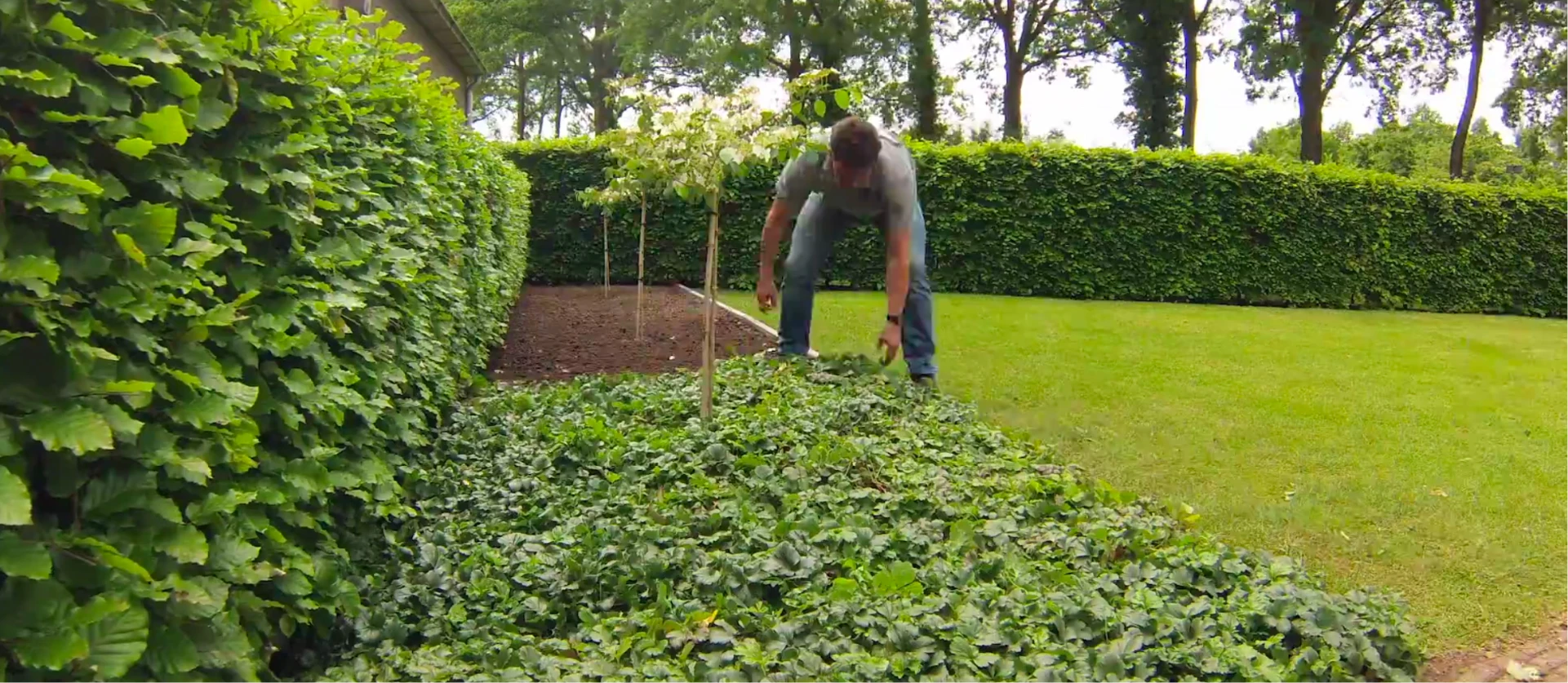
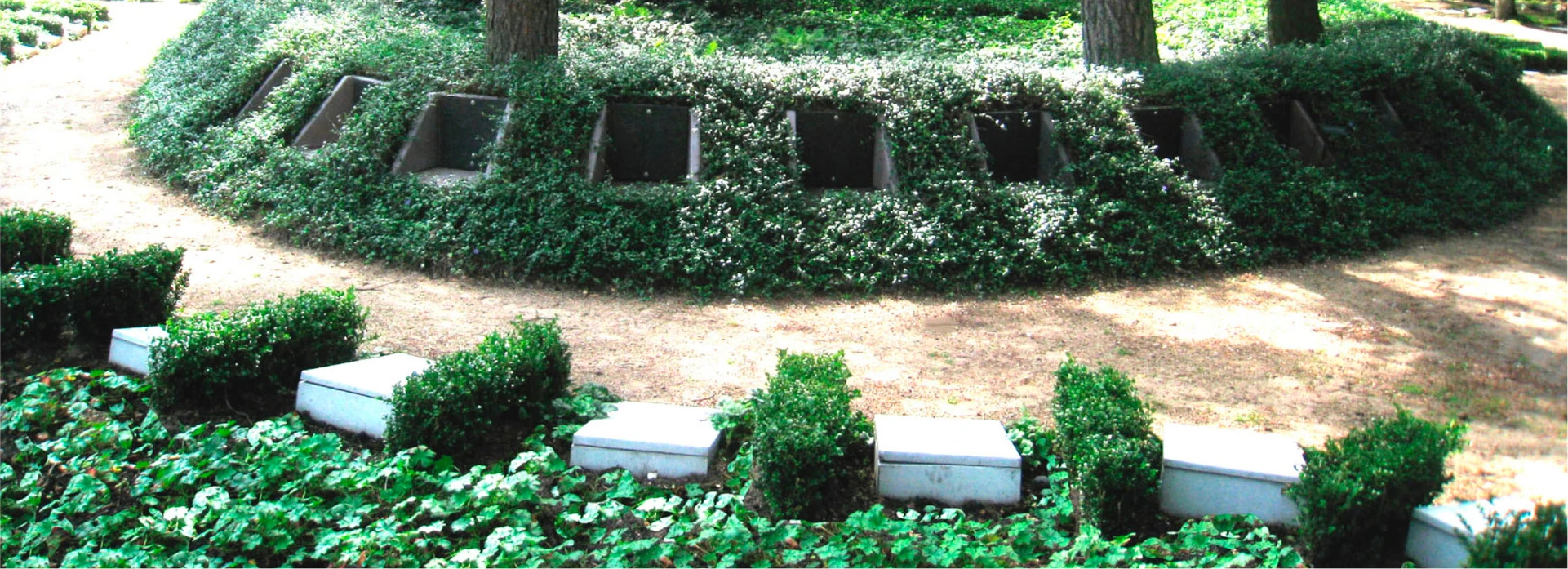
A great way to make your garden easier to maintain is by creating planting beds or borders and filling them with dense, ground-covering plants. Closed planting reduces weed growth because where plants grow, weeds can’t. Dense coverage also blocks sunlight from reaching the soil, preventing unwanted plants from germinating. The key is to avoid open spots — make sure the entire surface is covered.
However, when planting young plants or small ground covers from pots, this dense coverage doesn’t happen immediately. It can take up to three years for them to grow together fully. During this time, weeds can easily sprout in the uncovered areas.
That’s exactly why Covergreen developed its ready-to-use plant mats. Each mat is pre-grown and rooted, measuring 57×38 cm, and can be laid directly next to each other. The result is an instant green carpet that completely covers the soil from day one.
With these ready-to-use ground covers, you immediately enjoy the benefits of a mature, low-maintenance planting. Covergreen plant mats are available in several varieties — made from perennial ground cover plants and small shrubs.
If you’d like to have a lawn, there are several ways to make it low-maintenance: a robot mower, artificial grass, a slow-growing grass mix, and lawn edging.
Robot mower
A robot mower cuts the grass for you, no more manual mowing. By placing a boundary wire around your lawn, the mower knows when to turn around. It moves in a crisscross pattern to cover the entire lawn and returns to its charging station automatically when done. This alone can save you hours each week and is a big step toward a low-maintenance garden.
Artificial grass
Artificial grass is another great option. It stays green all year, doesn’t develop bare patches, and requires minimal upkeep. You’ll never need to mow again, and modern artificial grass varieties look remarkably realistic, sometimes hard to distinguish from a perfectly mown natural lawn.
Slow-growing grass mix
If you prefer real grass but find a robot mower unnecessary or too expensive, consider a slow-growing grass mix. Seed companies like Barenbrug now produce grass that grows much slower than standard varieties, requiring fewer cuts per year.
This type of grass not only grows more slowly but also needs less water and fertilizer. On average, it grows just 20 centimeters per year, about three times slower than normal grass.
Lawn edging
To make lawn maintenance easier, install edging made of plastic or corten steel. This keeps the grass from spreading into your planting beds. Alternatively, lay a row of bricks or tiles along the edge, this allows you to mow right up to the border without trimming.
If you prefer a paved garden, that’s fine — but keep in mind that even paving requires some maintenance. Large tiles are easier to keep clean and have fewer joints where weeds can grow compared to smaller bricks or cobblestones.
You can also apply an invisible, water-repellent polish to reduce green deposits and stains for up to a year. To prevent weeds from growing between tiles, use an epoxy-based joint filler that seals gaps effectively.
Trees shed leaves every year, which means cleanup work. To make your garden more low-maintenance, choose trees that match your desired size and upkeep level. Shaped trees are a great option, if pruned regularly, they stay compact and drop fewer leaves. Smaller trees mean less cleaning and an easier-to-manage garden.
Good soil is essential for any garden; green or paved. If the soil isn’t prepared properly before planting, problems will arise later. The soil should have the right balance: not too heavy and not too light, free of weeds, and well-draining. Heavy clay soil can be loosened with sharp sand, while sandy soils benefit from added compost for structure.
Always remove weeds before soil preparation to prevent them from spreading through the garden later.
Watering lawns and plants by hand during dry periods can be time-consuming. At the same time, too much rain can also be a problem. Combining well-draining soil with an automatic irrigation system saves time and helps your plants thrive during hot, dry spells. Smart irrigation computers can even control watering times and amounts automatically. The best time to water is in the morning, not in the evening, to prevent fungal growth and moisture-related diseases.
To prevent weeds right from the start, Covergreen’s ready-to-use plant mats are ideal. We offer several varieties of ground cover plants suitable for different conditions. For example, the Lesser periwinkle (Vinca minor) blooms beautifully in white or purple in spring.
The Waldsteinia (Barren strawberry) thrives in moist, shaded areas and produces bright yellow flowers. The Euonymus (Spindle) is a hardy evergreen shrub that performs well in sunny spots. The Hedera (Ivy) is perhaps the most well-known ground cover in our range.
For dry, poor soils, the Sedum plant mat is the best choice — it can withstand harsh conditions. The Geranium (Cranesbill) adds colorful flowers and elegance to your garden. Meanwhile, Catmint (Nepeta) attracts bees and bumblebees, boosting biodiversity in your green space.
Do you think low-maintenance ground covers would suit your garden? Request a quote easily using our calculator. You’ll receive a price directly from one of our sales partners in your inbox. Just let us know which ground cover you’d like and how many square meters you need. Prefer a quick chat or have a question? Message one of our team members on WhatsApp.
Back to the overview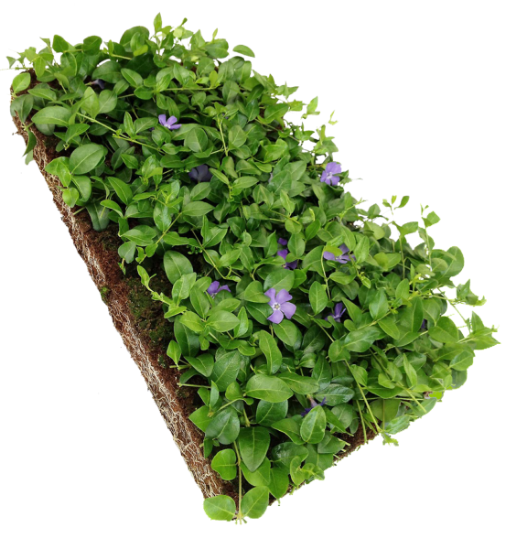
Copyright © 2018 - 2026, Covergreen®, All Rights Reserved. Ontwerp website ®reclamemakers. Development website Sitework
Continue with a language of your choice